Technical Specifications
| Parameter |
Specification |
| Product Designation |
5.9m Prefab Tiny House |
| Configuration Series |
Apple Pods / Apple Cabin / Caravan Series Assembled Building |
| Building Classification |
Assembled Building Unit |
| Physical Envelope Dimensions |
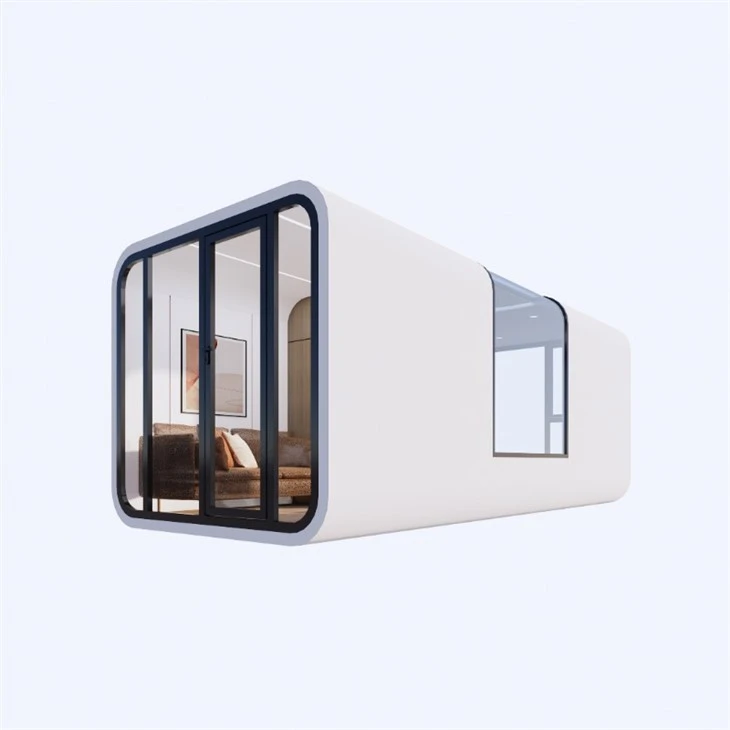
5.9m (L) × 2.2m (W) × 2.45m (H) |
| Structural Framing Metallurgy |
Galvanized Steel Pipe Skeleton Frame |
| Wall Shell Material |
CFRP Wall Panels |
| Roof Panel Type |
CFRP Roof Panels |
| Flooring Core Compound |
Waterproof SPC Floor Segments |
| Window Glass Integration |
High-Durability Privacy Glass Panels |
| Structural Protection Ratings |
Anti-Seismic 8 Degree, Typhoon Resistance 12 Degrees, Sound Insulation 40 dB |
| Fire Resistance Rating |
Class A Fire-Resistant |
| Overall Structural Lifecycle |
50+ Years |
| Global Regulatory Compliance Baseline |
US/AU/EU/BSI Standards |
| Core Field Deployment Approach |
Hoisting and Bracket Mounting Installation, No Extensive Land Leveling Required |
| Terrain Adaptability Range |
Mountains, Deserts, Seaside Areas |
| Specialized Sloped Anchoring Hardware |
Steel Brackets and Special Fixings for Rock Face Embedding and Hanging Pod Setups |
| Application Flexibility |
Observation Decks, Research Stations, Guesthouses, Emergency Shelters |
| Surface Finish Coloration |
White or Customized Color Options (Subject to Factory MOQ) |
Key Features & Benefits
- Strong terrain adaptability across mountain, desert, and seaside conditions supports deployment on sites unsuitable for conventional foundation construction.
- Lightweight structure modular design enables rapid deployment timelines compared to standard prefabricated building installation sequences.
- Hoisting and bracket mounting installation avoids extensive land leveling, reducing site preparation scope on sloped or irregular terrain.
- Anti-seismic 8 degree stability and typhoon resistance 12 degrees wind protection certify structural performance under high-hazard environmental load conditions.
- Fully detachable and removable frame construction supports asset relocation across multiple deployment cycles without structural degradation.
- International regulatory alignment with US/AU/EU/BSI standards supports cross-border procurement without separate jurisdictional redesign.
Applications
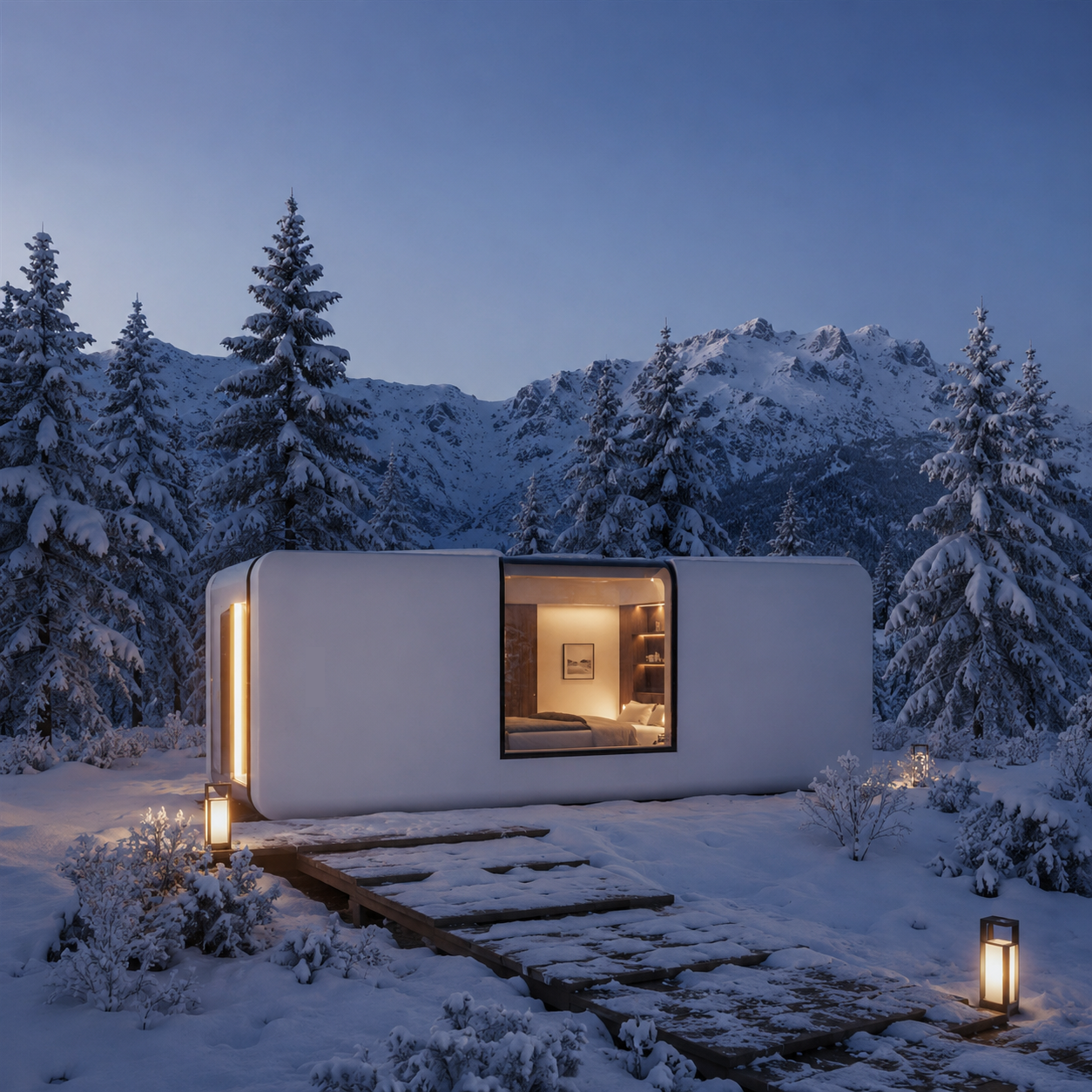
- High-altitude mountain observation deck systems use the steel bracket anchoring configuration to mount units on steep rock face terrain without ground disturbance.
- Fragile eco-resort seaside guesthouse developments deploy the low-impact hoisting installation method to preserve original coastal terrain and vegetation.
- Extreme climate desert research stations rely on the anti-corrosion metallurgy and waterproof envelope for sustained operation in arid, high-exposure environments.
- Rugged wilderness eco-tourism parks specify the leaving no footprint deployment profile to maintain protected land conservation standards during installation.
- Rapid-response disaster relief emergency shelters use the lightweight modular structure for accelerated shelter delivery following infrastructure loss events.
FAQ
1. How are units anchored on extreme sloped or rock face sites?
Installation uses hoisting and bracket mounting procedures with specialized steel brackets and special fixings designed for rock face embedding and hanging pod configurations. This approach avoids extensive land leveling on steep or irregular terrain.
2. What structural durability standards does the unit meet for seismic and wind loads?
The structure carries an anti-seismic 8 degree stability rating and a typhoon resistance rating of 12 degrees wind protection. These ratings apply to the galvanized steel pipe skeleton frame and CFRP panel shell configuration.
3. Is the 5.9m Prefab Tiny House accepted across multiple regional building codes?
The unit is built to satisfy US/AU/EU/BSI standards, supporting cross-border regulatory acceptance without separate regional redesign. Local permitting and jurisdiction-specific certification requirements should be verified independently with regional authorities.
4. How does the design minimize environmental impact on deployment terrain?
The fully detachable and removable construction supports a leaving no footprint installation profile, preserving original terrain and vegetation without permanent ground alteration. This design supports deployment in environmentally sensitive or protected land areas.

 EN
EN